Sunday, June 14, 2026

On Balance : Leila Seth (3.5/5.0)

2.5 Min read

Leila Seth was the original Suitable Girl. Her mother's efforts for her arranged marriage later inspired Leila's  son Vikram Seth to write the Suitable Boy - one of the highlights of  Indian writing in English. At the end of that 1500 page tome she marries her slightly provincial pan-chewing suiter. We expect that her 'lived happily forever' would consist of dull blissful domestic life not unlike what we imagine for Elizabeth Bennet. Leila's mother and to a large extent she herself would have thought the same.

It was not to be. She did have a happy marriage, but she achieved so much more in life that the entire Suitable Boy phase of her life is one subsection of the smallest section in this book. 

Leila Seth was born in a very well to do family, with her father being employed in the Imperial Railway Services. Tragedy struck the family as her father died young leaving his wife and children at the mercies of relations and friends. Still, they managed to have very good schooling and an anglicized upper class upbringing. I expected someone from her background to mention the same tropes that I read elsewhere about how 'secular' her missionary school was and how all religions were respected equally. So I was surprised at the candour with which she describes the coercion that she was subjected to in one of the finest missionary schools in the country. The sisters were categorical in their beliefs that only the catholics would be saved and the rest would all go to hell. This impacted the young girl so much that she was not only willing to convert but also become a nun. It got so serious that her mother had to change her school at a critical point of her academic life.

One of the reasons that its difficult to draw many life lessons from this book is that Leila Seth was a  prodigal talent. Despite the conversion drama and change of school she topped the entire undivided Bengal when she took her Cambridge School Certificate exam. A few years after marriage, her husband was posted to London and she followed him there with a young child. In London this mother of 2,  decided to study law, largely to pass time in that foreign city.  In that, she ended up topping the Bar exam - the first woman of any race to have achieved that feat.

A large part of the book concerns her life and long career back in India. She combined her talent with significant determination and hard work to achieve many laurels culminating in her being appointed the first woman High Court Chief Justice in India. As with a any book spread over so many years, the development of the free Indian state forms background to the story. 

This is the not the story of Vikram Seth's mother or the protagonist of 'A suitable boy'. This book is an honest chronicle of the life and times of Justice Leila Seth. It is told in a lucid and straightforward fashion and makes for an engaging read. 

PS: As I read this book, the comparison with Mother Mary Come to me was inevitable. One of the significant differences between the life trajectories of Mary Roy and Leila Seth was that Leila Seth had the constant support and encouragement of her Suitable Boy.  

Tuesday, April 7, 2026

The Loneliness of Sonia and Sunny : Kiran Desai (3.5/5.0)


3 min read

A maxim that I once read, and that has stayed with me - 'Don't write a 700 page book if u are not Vikram Seth'. Years later I might modify that to - or Abraham Verghese. But that is about how much I am willing to stretch it. At the outset, that is a test that this book fails. Having said that, Kiran Desai is an author I have always liked. I remember reading and enjoying The Inheritance of Loss when it won the Booker prize in 2006. 

As the name suggests, the book is about two privileged kids Sunny and Sonia, who despite all the advantages that life gives them, end up being mostly miserable. Sunny is raised by a single mother in a Panchsheel Park kothi in Delhi.He moves to the US, becomes a journalist of some sort and after leaving India, for some strange reason, enjoys the exotic poor people of New York. Sonia is also from Delhi. Her father is a caricature of a Punjabi businessman and her mother is a pahadi of Indo-German lineage. She studies liberal arts in a US university. The families are known to each other thru some Allahabad connection. When Sonia's Allahabad grandparents know of her unhappiness in the US, they try setting her up with Sunny. That doesn't work out, but they meet later on a train and a combination of loneliness and hormones are able to achieve what the grandparents could not. Some melodrama and a lot of Goa follows,  followed by a lot more of Mexico.

You would have figured out I am not crazy about how the story meanders. The interactions between Sunny and Sonia could have  taken more pages, considering the name of the book. I think an excessive number of pages were devoted to Goa - but atleast that had something to do with the protagonists. The whole bit about Mexico could have been eliminated to optimize the length of the book. It was as if  the author visited some village in Mexico, like it, and decided to just include it in this book. Not sure what the editor was being paid for.      

What saves the book is that Kiran Desai still remains a very good author. She writes well and her observations , specially those pertaining to immigrants or Indians abroad, are exceptionally sharp. In a specially good part, Sunny's upper class Delhi mother visits London. The bus driver, of asian extraction, tells her that all that she is seeing around her is stolen from colonies like India. She is horrified - that a bus driver is trying to find common cause with her, just because he shares her ethnicity. She wants to have nothing to do with the bus driver, as a representative of the 'haves' of Delhi she would rather find common cause with the white 'haves' of London. Another brilliant passage is when Sunny, despite being a NewYorker, feels a sense of justice in the 9/11 attacks. In this passage the author expresses the outrage that most of the Global South feels about America's bullying ways. I am writing this review as the world waits for Donald Trump's ridiculous, mafia style deadline for Iran is set to expire in a few hours. 

I have previously observed most author's magnum opuses tend to be at least somewhat autobiographical. So there could be some amount of Kiran Desai in Sonia. To begin with both have Indo-German mothers from Mussoorie. I am not sufficiently motivated to research beyond that. If someone does look into it, please share in the comments.

This is a good book from a talented writer. Might have been a very good book if it was 200 pages shorter. 

PS: In 2011 the Turkish nobel laureate Orhan Pamuk was at the Jaipur Literature Festival. After a session I tried approaching him for an autograph or something. He gave me as much notice as a Nobel laureate ought to give a random young fan - which is not much. But a pretty young Indian woman accompanying him noticed this and tried to make up for that by chatting me up. That woman accompanying Pamuk was his then girlfriend, Kiran Desai.          


Tuesday, March 3, 2026

The last testament of Oscar Wilde : Peter Ackroyd (3.5/5.0)


2 min read

Ireland has produced some of the most eminent authors in the English language, from Yeats to James Joyce. While the literary merits of Irish authors versus others can be a matter of debate, what is not a matter of debate is that most celebrated wits in the English language have been Irish. I don't think anyone else compares to GB Shaw and Oscar Wilde. 

I have been a fan of Oscar Wilde's ever since I read The Picture of Dorian Gray and then all the more after reading his comedies including the exceptional The importance of being Earnest.  So much so that I made a point of visiting the Pere Lachaise Cemetery, where he is buried, on my first visit to Paris.

Oscar Wilde had an aristocratic Irish upbringing, followed by a typical aristocratic English youth. That meant a degree from Oxford , trips to Paris and a lecture tour of America. Even before he found fame for his writing he found fame for being Oscar Wilde. He was a society fixture, like a 19th Century Orry.

However, what he was also known for then and to a large extent in posterity was his homosexuality. Specially his (in) famous court case and subsequent ignominy. Oscar Wilde did not take a lot of trouble hiding his fondness for young men (and boys). Like a lot of people with privileged birth and status, he thought he was above the rules of the contemporary society. One of his paramours was the son of the Marqués of Queensbury (known for framing the 'Queensbury Rules' that govern modern boxing). When Queensbury took  to  insulting Oscar Wilde about this, Wilde filed a court case for libel against the Marques. Oscar Wilde lost this case leading to imprisonment, bankruptcy and expulsion from society. He spent his final few years as a broken man in Paris. 

This book is a memoir from the point of view of this defeated and contemplative Oscar Wilde. It covers the whole of Wilde's life including his childhood, his success in London and his eventual downfall. It is interspersed with anecdotes from his final years in Paris.To a fan, while not an authority on Oscar Wilde, the voice in the book does seem like that of Oscar Wilde.. It has the wit and pomposity that one expects of Oscar Wilde.  One peculiar aspect of the book is that it it full of classical greek references. I am not sure if that is Wilde or Peter Ackroyd showing off.

Amongst the several gems in this book, there is a self referential critique of the memoir as a literary form. At one point all of Wilde's friends disagree with the facts presented in the book and implore him not to publish the book. This point is something the reader should always remember, whether the author is a fictional Oscar Wilde or a real Arundhati Roy. 

So, all in all, a good read.

PS: Picked this book on a whim, while casually strolling the Blossoms bookshop in Bangalore.

Saturday, February 7, 2026

Butter : Asako Yuzuki ( 4.0/5.0)


2 min read

The vast majority of my reading of Japanese books (translations) consists of reading Murakami - who is a wonderful author. Apart from Murakami, I think I have read the brilliant Devotion of Suspect X and the old Honjin Murders. I think Murakami's works, while based out of Japan, inhabit a parallel world of their own. So those might not be a good place to understand Japan from. In that sense, this is the first book I have read about contemporary Japan.

The book's protagonist is a journalist, Rika Machida, who is fascinated with a new murder case. A woman, Manako Kajii, is accused of causing the death of three men. Kajii is alleged to have been in a sugar relationship with all of the victims. There is  intense public interest in the case, largely stemming from the fact that Kajii does not conform to the physical or moral standards expected of a Japanese woman. Rika uses Manako's love of food to bond with her and get an exclusive interview. Her association with Kajii leads Rika on an exploration of food, sex and relationships that makes her question her own life choices.  

This deceptively long book touches upon several themes. The city of tokyo and several of its neighbourhoods are described intimately. The searing coldness of its winters is brought to life and then compared with the separate cold of Nîgata in the north. The author gives us a peek into the hectic and competitive lives of journalists in Japan. Food is another major theme - Japanese as well as western. Not being a foodie, the bits on food were a little too much for me. Some details on cutting and cooking of animals were simply gross for a vegetarian. The main theme of the book, however, is the place of young Japanese women in a changing supposedly modern society. There seems to be an  expectation from young women of being thin, hard working and yet have time for a family. Though men don't have it easy either in terms of pressure or expectations. 

However this is not a moralizing or even a feminist book. Unlike some of those books the author does not claim to have figured out the answers to the questions of modern society. Should women not care about the expectations from society ? Should they get away from the rat race and focus on family ? The protagonists are constantly struggling with similar questions and and coming to different conclusions at different points in the book. There is also a discussion on the question of sex in marriage and the broader role familiarity as it relates to the sexual act. This is not something I have seen addressed in many places. 

While this long  book starts like a murder mystery or a thriller it eventually unfolds as a complex exploration of japanese society - or even the broader modern society. At some points the complexity is such that its has shades of Dostoyevsky. I didn't find it an easy book to complete and the rating I have given is more for novelty and complexity than pleasure.

Sunday, December 28, 2025

Mother Mary comes to Me : Arundhati Roy (3.5/5.0)


3 min read

Arundhati Roy's mother was not a nice person. This was despite the fact that she might have been a good person, who did a lot of good for the society. She was mean, petty, vindictive and treated those close to her in the worst possible fashion. Her watching from a distance, as her brother was being evicted from the only home he knew, was classic bollywood villain style. To use the author's own terminology - her mother operated like a gangster in the small town in Kerala where she eventually settled.. Like most gangsters, all the way upto The Godfather, she had a tragic backstory which possibly made her the way she was. 

When I was reading VS Naipaul's biography, by Patrick French, I was overcome by a sense of deja vu (or the equivalent of having read this somewhere). Of course I did, because his most famous work A House for Mr. Biswas was based on his life or rather the life of his father. A similar sensation will come over a reader as they read this book, having already read Arundhati Roy's The God Of Small Things. This time I was aware beforehand, as most of us are, that GOST was based on a fictionalized twist in her mother's life story.

Mary Roy grew up in a privileged, anglicized syrian christian household ruled by a tyrannical patriarch. To escape, she married the first man who proposed to her, a quintessential planter in Assam. This was not very helpful as the guy turned out to be a hopeless alcoholic and in Mary Roy's terms a 'nothing man'. She left him and moved with her children to a family owned ramshackle house in Ooty, from where her mother and brother (an Oxford Rhodes scholar) try evicting her. Why they do this is not explained very clearly in the book, specially as Mary Roy subsequently depends on her mother and brother to support her family. This turbulence in Mary Roy's life  means that her children grow up with an extremely insecure upbringing. This is not helped by Mary Roy's own brusque behaviour with the children.

From this background Mary Roy starts a small school which eventually becomes the legendary Pallikoodam school in Kottayam and establishes her as one of the most respected and feared people in that town. She also challenges the norms of Syrian Catholic community in Kerala and fights for the daughter's share in family inheritance. She wins a spectacular victory in the Supreme Court. It is possible that for a single woman to make a mark in the patriarchal society of a small town she had to be a gangster.       

In many ways the author's own life has echoes of her mother's life. Arundhati Roy also, in a sense,  ran away from home. On top of her insecure and 'on the ledge' childhood, she also had a desperate hand-to-mouth vagabond  existence in Delhi. This phase of her life would have been tragic but can be viewed, as it turned out well in the end,  as a sex  and drugs (rock and roll - not sure ?) youthful adventure. While Mary Roy directed her energies making things and changing the world, Arundhati Roy's rebelliousness has taken a different route.  The combination of her literary success and  resulting earnings gave her the freedom to become a full time rebel for all seasons. An international champion of the oppressed, more comfortable opposing things than proposing solutions, like an Indian Greta Thunberg. Like the proverbial apple that doesn't fall far from the tree she has become a gangster in her own right.

In writing this book, the author book has tried to be as honest as possible, her relatives have specially been given the full benefit of her honesty. Her own personal life is not as clearly explained as theirs. Her instinct of running away from anything that approaches a regular stable (boring ?) personal relationship is not addressed. Her own class privileges and biases might have been glossed over as well. These minor points aside  I think this memoir is an good read about the lives of two interesting women.


Friday, December 19, 2025

Spy Catcher : Peter Wright (4.0/5.0)


1.5 min read

The word spy, specially a British spy, invariably evokes images of James Bond. You are thinking fast cars, glamorous women, assassinations. This book tells us that the reality is much more mundane and also far more sinister.

Peter Wright's father worked on radio technology directly with Marconi. From that privileged background somehow he meandered into poverty, working on a farm to landing at Oxford and eventually  starting  his life as a scientist for MI5 working on gadgets, specially radio devices. Eventually he rose up the ranks to be the assistant director.

This book is an overtly frank memoir of his times in the british secret services. On release, the book was banned in England, but not scotland.

The first thing that the book lays bare is the sheer scale of the govt snooping in Britain. It was not episodic or targetted but pervasive. The british intelligence services tried to plant listening devices in as many embassies , hotels conference rooms as possible. For e.g. when a former colonial state was negotiating its independence it was par for course for their british counterparts to expect MI5 to get a transcript of the other side's internal discussions. Things like breaking and entering also seem to be standard operating procedure.

The book spends a significant amount of time discussing the Cambridge Five and the impact of that scandal on the british intelligence services and their relations with the US intelligence services  CIA and FBI. The author makes the explosive claim that his boss and MI5 head Roger Hollis was also a soviet spy. He , strangely enough, seems to have shared his suspicions of his boss with the Americans. This should provide some perspective to those who think that their office environment is toxic.

Largely the picture of the intelligence services that emerges from this book is less James Bond and more petty office politics - a la  The Office. 

This is an OK read , the rating I have given is more for the explosive nature of the contents in the book.   

Sunday, December 7, 2025

The Covenant of Water: Abraham Verghese (5.0/5.0)


3 min read

I wanted to say that Abraham Verghese's magnum opus 'The covenant of Water' is probably one of the best Indian novels in English for this year. Then I realised that the book was actually released in 2023. It's amazing that I didn't hear of this book for two years - mostly down to the fact that it was not shortlisted or even longlisted for Booker prize ! Instead, the book got its publicity from being Oprah's book of the month sometime in 2023. Oprah has declared it to be in the her top three all time favourite books. Thanks to my book club for picking this one a few months back.   

The book starts in the year 1900. A twelve year old girl in the southern Indian kingdom of  Travancore  travels on water to a church away from her own village. It's the day of her marriage, she is to be the second wife of a forty year old landowner and a mother to his two year old son. Over the course of the book this girl from an impoverished background is transformed to big ammachi, the matriarch of the five hundred acre Parambil estate. The book is as much about three generations of ammachi's family as it is about Parambil and the families that own and serve it.

In the second chapter suddenly we are in Scotland and checking if its the same book that we are reading. Digby, a dancing girl's son overcomes obstacles and becomes a doctor and comes to practise in colonial Madras. He is adjusting to the new sights and sounds of Madras and also the customs and hierarchies of the colonial white society in the city. There is also a Swedish doctor who has devoted his life to caring for leprosy patients.

Over the next sixty odd years , the story of the Parambil family mixes with that of these doctors and other myriad characters to produce this nine hundred page tome. The cast of characters includes several generations of  ammachi's family  including her children, grandchildren as well the various kochamma's, communists, naxalites, estate owners and opium eaters. There is also the mysterious affliction which affects a lot of the Parambil men. They are unable to navigate even shallow bodies of water and several of them die by drowning in shallow ditches. 

Kerala, specifically the princely state of Travancore figure features as a major motif in the book. The author has done an exemplary work of evoking the rural catholic Kerala from the turn of the twentieth century. This includes the people, the customs, the food, the courtyards and kitchens to their caste  prejudices. In the deep background India is getting its freedom.

With any such 'Kerala' English book the comparisons to Arundhati Roy's God of Small Things  are inevitable. The books are similar in how they describe the physical beauty and touch upon the political landscape of Kerala, specifically caste discrimination. This book, by the strength of its size is both more detailed in the way its evokes the landscape  and broader in its scope. There could be possibly five to six GOSTs within this book. Though I think the characters in GOST were  sharper and came in all shades, many more of them in darker hues. In this book we struggle to identify any mean, bad or ill intentioned people at all.    

Actually the author and book that this book most reminds me of is Vikram Seth and the Suitable Boy. While the story lines are completely different it is similar in the sense of a wonderfully written, multigenerational, early 20th century story. Vikram Seth along with V.S Naipaul and Rohinton Mistry have been the trinity of my Indian authors who write in English. ( All NRIs....hmmm). I can't think of any reason why Verghese is not right up there- will have to read more of him to confirm. 


Wednesday, October 29, 2025

The Emergency - A personal history : Coomi Kapoor (4.0/5.0).


The word 'Emergency' has been thrown about so liberally by the current ruling regime, to corner the Congress party, that it has almost become just another piece of rhetoric. Then there is the counter charges from the opposition of 'undeclared emergency' by the Modi government. All of this makes emergency feel like something bad, but not so bad - like a little more of the godi media and some more exaggerated sycophancy than what we see today.    

So it was quite a rude surprise to read about the reality of the Emergency that Indira Gandhi declared in 1975.

I guess all powerful people are paranoid about people plotting to take away their power. Indira Gandhi who had moulded the Congress party in her own image was no exception. By 1975 the conversion of Congress from the party that fought for the independence of the country to the party that was solely devoted to furthering the cause of the Nehru- Gandhi clan, was complete. Most stalwarts of the independence movement had left the party or had been kicked out. When the protest movement by JP in Bihar and others in the country gained momentum it was easy for Indira to convince herself that the country was moving towards anarchy and she had to act in the interest of the nation. The last straw was Indira's disqualification by an Allahabad court  in a case bought about by the maverick socialist Raj Narain

The book suggests that the idea of an emergency was first suggested in a strategy note by the Indira acolyte and then Bengal chief minister Siddharth Shankar Ray. The Allahabad court ruling was the event that triggered its execution. It started with a bang with a very large number of opposition political leaders arrested and power supply cut to most significant national newspapers preventing them from publishing.

One of the hallmarks of Emergency was how severely media was muzzled by VC Shukla. Most large media houses promptly and enthusiastically fell in line. Foremost among those being TOI, Hindustan Times and The Hindu. LK Advani summed up their attitude to emergency as "When asked to bend, they crawled". Among several smaller publications one large media house that resisted was The Indian Express led by the formidable team of publisher Ramnath Goenka and editor Arun Shourie.

Another hallmark of Emergency was the rise, the patronage and the excesses committed by Sanjay Gandhi. It was clear to many like the Haryana chief minister Bansi Lal that the way to Indira's heart was through Sanjay and they left no stone unturned in pleasing him. Sanjay had the run of the country and power dynamic in the congress started shifting from Indira's people to Sanjay's people. The likes of Ambika Soni came to the fore.

One interesting thing that I learned from the book was how emergency ended. Indira was the daughter of Jawaharlal - a man feted by the global 'intelligentsia'. This adulation was inherited by Indra as well. The withdrawal of this affection and a virtual blacklisting by western friends was the one thing that disturbed Indira more than any of the excesses committed by Sanjay and his people. 

The author has done a good job in bringing alive the atmosphere of the emergency. The book also provides us a backstory and context to several political leaders from 1990's to now. Author's own husband was arrested and mistreated during emergency so that would definitely have had some influence on her writing.  The books seems like an essential reading in the understanding of post independence Indian history.

PS: Another book that covers this period and provides a more visceral and poignant view is Rohinton Mistry's A Fine Balance . That is one of the gem's of Indian writing in English and one of the only English books I have read that really delves in detail into the lives of India's poor and unfortunate (of course this could be function of my limited exposure) , For me A Fine balance , not everyone's cup of tea, was like an Indian Grapes of Wrath and one of my few 5.0/5.0 books.

Friday, August 15, 2025

Ashenden : Somerset Maugham (4.0/5.0)


Most people know James Bond, that invincible British super spy, or Jason Bourne - his American cousin. If you are not happy with your spies being so energetic and gadgety, or their world's so black and white, u have John Le Carre's spies and spymasters such as George Smiley  or The Spy who came in from the cold. John Le Carre's aesthetic was apparently influenced by  Graham Greene's books that touched upon the spying business such as The Confidential Agent or The Quiet American. But before all of these there was Ashenden - one of the original gentleman spies.

Ashenden was introduced by Somerset Maugham in a series of loosely connected stories. Ashenden was a writer in England who was tapped by the secret services to work for them at the break of the First World War. He was stationed in Geneva, in neutral Switzerland, and got his assignments from his brilliant and ruthless boss known by his monosyllabic code name R. In course of his assignments Ashenden meets a lot of interesting characters and is involved in a lot of intrigue. However, he does not run after any bad guys or is himself chased in any alley. He mostly travels across Europe handling agents and spending a leisurely time. 

Somerset Maugham is one of my favourite authors of the English language (along with Graham Greene). Unlike a lot of the greats he is super smooth and easy to read. I specially like his short stories, of which he has written many covering his life in England, Europe and his travels to the far east. Ashenden stories are very similar in the pace and style to a lot of his other short stories and just happen to be about a spy.  

Ashenden is also the alter-ego for Somerset Maugham who was himself tapped by the British secret services during the First World War. He has used that experience as a raw material for his stories. Though he was not so impressed with the life of spies as evidenced by the scene in his first book, which I have reproduced below. Ashenden the author is being recruited by R , who is trying to lure the author with what great material he can collect a member of the secret services

" I'll tell you an incident that occurred only the other day and I can vouch for its truth. I thought at the time its would make a damned good story. One of the French ministers went down to Nice to recover from a cold and he had some very important documents that he kept in a dispatch acse. They were very important indeed. Well, a day or two after he arrived, he picked up a yellow haired lady at some restaurant or other where there was dancing, and he got very friendly with her. To cut a long story short, he took her back to his hotel - of course it was a very imprudent thing to do - and when he came to himself in the morning the lady and the dispatch case had disappeared."

R finished and looked at Ashenden with a gleam in his close-set eyes." Dramatic, isn't it ? he asked.   

"Do you mean to say that happened the other day ?"

"The week before last."

"Impossible," cried Ashenden. "Why, we have been putting that incident on stage for sixty years, we've written it in a thousand novels. Do you mean to say that life has just caught up with us ?" 

☺

I thoroughly enjoyed the Ashenden stories and just like his other short stories these will make for great vacation reading.


Tuesday, August 5, 2025

The palace of Illusions : Chitra Banerjee Divakurni (4.0/5.0)


Life is too short to read mediocre books. I keep a high bar for books that I pick up. It's a fact of life that when one keeps a high bar one will reduce the Type 1 error but at the same time some Type 2 error will creep in. In English, that means that while one will hardly read any mediocre books there will always be some good books that will pass below the radar.

That is what happened with me when The Palace of Illusions first came out fifteen odd years back. I thought this one more new age mediocre pulp feminist takes on Mahabharat. When the book was selected as a reading for my book club I had no option but to pick it up. I stand corrected, the book is a unique and distinctly feminist take on the Mahabharat, but it's definitely not mediocre.

The book is largely a re-telling of Mahabharat from the point of view of Draupadi. The main attraction of the book is that it is another pretext to revisit the Mahabharat. I am convinced that Mahabharat is one of the top cultural heritages of this country. It is an amazingly complex and layered tale where nothing is what it seems - good people do evil deeds while the evil beguile gods with their penance. God himself encourages brother to kill brother for reducing the pressure of human beings on earth.With such brilliant source material its very difficult to go wrong - but not impossible. Chitra Divakaruni , who is a teacher of creative writing at a university in the United States, skirts this line by a good margin.

One of the main quirks of the book is that it is told from the point of view of Draupadi - but the Draupadi of this book seems like an alter ego of the 20th century Chitra Divakaruni. The author has also introduced a whole Kyunki Saas Bhi Kabhi Bahu thi vibe with the supposed tension between Kunti and Draupadi - again I don't know if this was  directly referenced in the original sources. Then there is Draupadi's obsession with Karn , which I think finds mention in several other sources as well. Despite , or maybe because of, these quirks the books remains true to Mahabharat and is a distinct well written book.

While speaking of Mahabharat I would also take the opportunity to mention 2 other takes on the book. Devadutt Patnaik's Jaya remains one of my favourite versions of the Mahabharat - its an erudite take on the book which combines various traditions and provides the authors own interpretation. Then there is Shashi Tharoor's Great Indian Novel  which makes a clever use of the Mahabharat to tell the story of Indian democracy. 


Thursday, July 3, 2025

Maila Anchal : Phanishwar Nath Renu (5.0/5.0)

It's the year 1946 in a remote village of Marygunj in Bihar, near the Nepal border. Villagers hear that the authorities are looking for a young man in their community. Baldev, a known nationalist trouble maker  is promptly tied and delivered to the police station. The villagers are shocked to learn that the officials wanted to consult  Baldev and actually call him Baldevji. In those pre newspaper days in the villages , news travelled at a glacial pace and the villagers did not realise that it's almost fashionable to be a nationalist and a follower of Gandhi baba.This opening act sets up the novel which is a heartbreakingly realistic portrayal of village life in India about the time when the country got its independence. 

The book is set in Marygunj, an indigo village named after the young dead wife of a long forgotten british collector. It is a typical village of the time with a few dominant families and many more poor ones. The main strand of the novel is about the arrival in the village of the idealist young doctor to set up a malaria research centre. In the course of his stay he takes care of and falls in love with the daughter of the rich and prominent householder in the village. The resemblance to 'Sachiv ji' and 'Rinky' is not coincidental. It is possible that this is one of the earliest usage of the 'pardesi babu' trope, used in so many old hindi movies and continued in 'Panchayat'. Their love story carries on in the backdrop of the Doctor's work, of the village politics and somewhere in the background, a country called India getting its independence. 

The village life that emerges from this book is not Gandhi's romanticized version. It comes across more like the sink of ignorance, casteism and exploitation that Ambedkar saw them as. What hits a 21st century reader first is the abject poverty in which so many villagers lived. The kind of poverty where there are people who have not had a poori or owned a shirt ever in their lives.

Then there is the exploitation. Exploitation of the poor , who are forever in debt - no matter how hard they work. Of women, specially of the lower castes - by their  families, by the rich, by the 'religious' gurus. Women who have to provide comfort to some lord who has their father's / husband's signature on a blank piece of paper. Surprisingly the book also shows how some lower caste women had more sexual agency then their upper caste peers. 

Freedom struggle in the country did not really impact the day to day lives of the villagers A few Congress programs in the village were largely objects of curiosity. Despite this, Gandhiji or Gandhi baba comes across as someone who was revered as a larger than life figure, almost a saint if not a god. 

It is largely believed that the Congress party lost its idealism in the Indira era, when power shifted from Nehru and first generation of freedom fighters. However, this book shows how the decay started even before Indepence , the moment power was in sight. Idealists in the party were being sidelined or even ridiculed in favour of the merchant classes who had lately become fervent Gandhians. One congress worker remarks that the new district Congress president was the same liquor shop owner whom they picketed a few months back. Actually even today, if we think about it, we can see all around us industrialists who benefitted from their 'support' to the Congress.

This book is an essential read for an understanding of where is the Indian society coming from. It's reputation as one of the most consequential books in Hindi literature, after Premchand's Godan, seems well-deserved.


Wednesday, June 18, 2025

The Shortest History of India : John Zubrzycki (4.0/5.0)


As the means of travel and communication improved over the millenia, people across the world now have a common set of news and that will possibly translate to a common history for later. Few hundred years back every region had its own unique history and a few thousand years back every village or town had its own. In that sense there might no such thing as a national history.  

Therein lies the problem of writing an Indian history , specially once that goes back more than a few hundred years back. Several attempts have been made - notably Discovery of India  by Jawahar Lal Nehru. The breadth of the topic is sure to intimidate anyone attempting to approach it. This book does a tidy job of balancing the breadth and depth of this topic within 275 odd pages. 

It starts with theories of Homo Sapiens arriving on the subcontinent moving on to the  migration of the Aryans and the Harrapan civilization. In his description of this period the author seems to be influenced by Tony Joseph's Early Indians (Another interesting book that addresses , well as the same suggests - Early Indians) This is followed by Maurya / Ashoka empire and the 'Classical Golden Age' of the Gupta's. Muslim rulers such as the Delhi Sultanate , Deccan Sultanate and the Mughals are covered - including the contemporary Rajputs and Marathas. South Indian dynasties such as the Chola's , Chera's , Pandya's etc are discussed as well. 

The book covers the arrival and the occupation of the British as well as the freedom struggle. It even comments on India after the british rule - all the way upto Modi raj. (Suffice to say, the author would not be counted as a modi bhakt).  

I think this is a good effort and a great place for a concise breadth view of Indian history. One amusing note was that the author seems to go out of his way to trivialise the brutality of some of the muslim rulers. Those minor hiccups notwithstanding - This is a book I would recommend.    


Monday, May 26, 2025

Dethroned - The Downfall of India's princely states : John Zubrzycki (4.5/5)


'India protests new laws disenfranchising minorities in Bhopal and Kathiawar' or 'Indian government exhorts Hyderabad and Bikaner  to update age of consent for women to  18'. Imagine the headlines in an India where states such as Hyderabad, Jammu and Kashmir, Bhopal and hundreds of others co-exist under alongside 'India'. India being the newly independent erstwhile British India. This was not only a plausible scenario but also a highly probable one. As a matter of fact the 'Instrument of Accession'  that the princely states signed with the independent India gave control of only 3 spheres to 'India' - foreign affairs, defence and communications. 

The Indian subcontinent that the British ruled had two main systems of government. The British crown directly ruled the so called 'British India', which was approximately three fifths of the land mass. A substantial two fifths was divided among almost 550 princely states. These states managed their own internal affairs under the crown's protection. Their fiefs ranged from a few square kilometers to hundreds of thousands of kilometers in the case of Hyderabad and 'Jammu and Kashmir'. The rulers of these states fully expected to be independent once the British packed their bags and left. Congress leadership realised that having hundreds of these 'independent states' would be a nightmare to manage. This would also have deprived the citizens of these princely states the full benefits of Independence. The task of assimilating these states fell to the unlikely pairing of Vallabhbhai Patel and VP Menon. As the name suggests , this book covers the few months in 1947-48 within which this project was completed with an epilogue of subsequent events.

Sardar Patel was a london trained barrister from Gujrat who traded his suits for dhoti kurta when he answered Gandhi's call. He  was one of the towering leaders of Congress with a huge mass following of his own. The lessor know VP Menon from Kerala was a man of many experiences. While starting his professional life as a teenage labourer at Kolar mine fields he then rose to be at the top ranks of the British administration in India. These two used every one of the old 'sam - dam - dand - bhed' to assimilate the princely states. They lulled them into a false sense of security, painted lurid pictures of people's revolt and if all failed threatened with direct use of force to ensure that the princely states fell in line. In my view the two them did the dirty work required to ensure that India came out of the British rule as one cohesive geographical unit. Specially knotty issues emerged in the case of some princely states. Hyderabad and Junagarh had muslim rulers but largely Hindu populations while the scenario was reversed in the case of Kashmir.

Zubrzycki does a good job of throwing light on this very significant part of the Indian history. He covers biographical aspects of  Patel, Menon and the major princes interspersed with a taut narrative of the events. A major source for the book is Menon's own book on the subject 'Story of the Integration of Indian states'

This is not only a good read but one of the more important books that I have read in some time.


Wednesday, December 25, 2024

The Alteration : Kingsley Amis (3.5 /5.0)


Last month The Economist published a list of top books set in a counter factual world. A world that would have been if a major historical event had turned out differently. I already like this genre and have read quite a few books on the list.

A significant proportion of these books involve a different end to the second world war. C.J Sansom's Dominion and Robert Harris's Fatherland are set in an  England which is losing or has lost the second world war to the Nazi's. In both these books the alternate history is a significant part of the plot. Then there are those books where the alternate history is a part of the backdrop and has nothing to do with the actual story. This would include Francis Spufford's Cahokia Jazz set in an independent Indian nation which co-exists with the United States and which I reviewed a few months back.   

Also in the second category is Michael Chabon's The Yiddish Policeman's Union which is a cop story set in a world where the Jews have been settled in Alaska instead of Israel. To take a bit of a tangent here, Michael Chabon is an amazing author who has written several other awesome books such as The Amazing Adventures of Kavalier and Clay and Gentlemen of the Road. Very highly recommended if someone is looking for a new author to read.

Coming back to the list mentioned, I was surprised to see one of the top mentions was The Alteration by none other than Kingsley Amis, of the Lucky Jim fame. Lucky Jim is another book I love and often recommend.

The Alternation is set in an England that very different from the protestant England of Henry the VIII that we know. This is a world where Martin Luther's revolution against the papacy never happened. As a matter of fact Martin Luther himself became Pope Germanium the I. So this is a world where Vatican won against the protestants as well as science. Across Europe the Pope's world is the law.   

The story is about a boy in London called Hubert who is a gifted singer. In fact he is such a gifted singer that master singer's from the  Pope's court come to see him. They decide that he is a suitable candidate for 'alteration'  which will ensure that he does not achieve puberty and spoil his voice. He might become one of the most famous singers in Christendom but on the other hand he will never have a wife or family. Hubert along with his family and friends struggle to digest these new circumstances over which they don't have much of a choice.

The book is well written, though the writing seems a lil odd at the start. Author brings out some aspects of how the world in which Catholicism ruled  supreme would look like. That bit requires a lil more work to appreciate than some of the other books mentioned above. Apart from the obvious historical aspects the book also ruminates over  how significant or otherwise is sexual desire and its fulfilment to human existence.

I will rate this a 3.5 - a good, different book.

Saturday, November 30, 2024

Submission : Michel Houellebecq (4.0/5.0)


September and October this year were French literature months for me. With  Man's Fate  I discovered Andre Malraux , an all time French great , and then Michel Houellebecq a contemporary star.

Submission imagines a scenario where the left in France teams up with a Muslim party to keep National Front and the hard right out of power. The leader of the Islamic party is the charming Ben-Abbes , who is bank rolled by the petro monarchies of the middle east. This leads to the Islamization of the  state institutions including educational institutes.  

All of this is viewed from the point of view of a washed out literature professor in Paris. He has no lasting relationships and his personal life consists of sleeping with a new student every year.

Michel is obviously a very good writer and presents some radical ideas in a logical fashion. For e.g. as the liberal movement has moved attacking the corporates and the state to attacking the family unit itself it has become like an autoimmune disease, which will lead to its own destruction. With increased labour participation of women leading to lower fertility rates and few marriages liberals will lose the Darwinian population race to more conservative sections of the society. 

Very good read.

Sunday, October 20, 2024

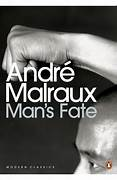
Man's Fate : Andre Malraux (4.0/5.0)


As I planned my trip to China, I tried picking up some books set in China , googled "Top books set in China". I settled on 2 books , Shanghai Baby and Man's Fate. I read a bit of the former but didn't complete and moved on to Man's Fate. Turned out to be a great choice. 

As I learned later Andre Malraux is one of the greats of 20th century French literature.

In the 1930's the civil war in China between the nationalists, led by Generalissimo Chiang Kai-shek, and Mao's communists was temporarily put on hold as they battled the Japanese invasion. The communists were supported by Soviet Union while the nationalist had the support of the west. At this point of history Chiang Kai-shek was the dominant of the two parties and was trying to contain his 'allies' while ostensibly fighting the Japanese.   

The book is set in the Shanghai of 1930's divided between the Europeans concessions and the Chinese city. The protagonists are a set of communist organizers who are setting up an insurrection in Shanghai, fighting the nationalists in the open as their superiors in Hankow are insisting that they are not to act against Chiang's forces. 

In not a great number of pages the book manages to explain the development of the communist movement in China and its uneasy relationship with the nationalists. And for that itself this would have been a great read but as is the wont of great authors it is also a complex human story which manages to explore the personal stories and insecurities of its protagonist's. Chen - the terrorist, Kyo - half Japanese progressive with an open marriage, Baron de Clappique  and several others have been brought to life with a few episodes and pages. 

With a great French author we are obviously assured of a dose of high philosophy and the book doesn't disappoint on that count as well.


Sunday, September 1, 2024

The Honjin Murders : Seishi Yokomizo (3.5/5.0)


It's wedding time in a feudal village in Japan. The elder son of the prominent family is getting married, fighting against the instincts and prejudices of his family. There are sightings of a mysterious 3 fingered tramp in the village and then - Murder ! Not just any murder but a locked room murder.

Ring in the private investigator Kosuke Kindaichi - a Japanese Sherlock Holmes. The Honjin Murders is a Japanese classic, first written in 1948 and recently translated into English. This is the first in the series of books with Kindaichi as the protagonist. 

I think after a first 10 odd books the mystery and the solution to the mystery becomes secondary in the enjoyment of the book , its more about the narration and quirks of the investigator and if that can hold the reader. This is where Agatha Christie scores specially with Poirot. On that count this first book is pretty OK as there is the novelty about 1940's Japan. The boyish Kindaichi makes a rather late entrance into the story. He is less flamboyant than a Sherlock Holmes and not old enough to accumulate the conceit or charm of Poirot.

All in all a decent vacation read , but not enough to tempt me to immediately go for more in the series.


Sunday, August 4, 2024

Hillbilly Elegy : J D Vance (3.0/5.0)


This book has been on my to-read list for a few years now, but the selection of the author as the running mate for Donald Trump rapidly moved it up the list.

JD is born to a teenage mother in Ohio in a community of immigrants from rural Kentucky. His father gives him up pretty early in life and his mother goes thru substance abuse and a string of boyfriends / husbands. Apparently this is not an unusual upbringing in the poverty struck towns of Appalachia or for that matter any rust belt ex-manufacturing towns in heartland America. As the Clinton democrats increasingly aligned themselves with the white collar coastal liberals and large organizations who were moving manufacturing jobs out of the US , it is no surprise to the author why these former democratic strongholds are attracted  to the MAGA rhetoric of Donald Trump.

The author credits his ability to overcome his background to the stable home environment that his gun-toting hillbilly grandmother provided. This is a conservative pitch for the traditional family structures and example of how liberal social mores and poverty combine to make a dangerous social concoction.

Even though he somehow completes high school the poor rural boy was too intimidated to even consider university admission. It was his 4 year stint in the marines that gave him the structure discipline and confidence to face life. Something like this could be one of the upsides of the Agniveer scheme in India. 

Though there are parallels between the migration of poor from the dust bowls of Oklahoma and the migration from rural Kentucky this book is no Grapes of Wrath. Similarily while the author's personal story is inspiring as a writer he is no John Steinbeck.  


Sunday, July 28, 2024

Cahokia Jazz : Francis Spufford (4.0/5.0)


I try as much as possible to buy books from the local book shop (Bahrisons in Gurgaon - it has a great collection) rather than Amazon. Like everyone else the main motivation is browsing through the books trying to discover new books / authors. Once in a while the reading gods smile upon me - this is one of those instances. As I browsed their extensive collection I picked this book up on just the blurb not ever having heard of the book or the Author.

The book is a whodunit set in an alternative history where not all native American tribes were vanquished by the Europeans. Cahokia Indians joined the union of American states on negotiated terms and retain significant powers and self respect within their state. It is 1922 , prohibition rages in the United States and there is a great amount of tension between the Tamaha (natives)  and the Takata (white) populations in Cahokia . In this fraught setting there is a murder of takata - not just a murder but what looks like an aztec style sacrifice pointing to Tamaha involvement.

The responsibility to solve this crime rests with a pair of detectives who are friends from the world war. A flashy smooth talking Takata and his reticent Tamaha born orphan partner. Dramatis personae includes the traditional Tamaha ruler or the "Sun" and his nephew - the "Moon".

The story is very well written , with great language and strong plot. It reminds me of Yiddish Policeman's Union , another alternate historical by one of my favourite authors. The writing is good enough for me to try and seek out other works by Spufford.


Wednesday, March 20, 2024

The Bee Sting : Paul Murray (3.5/5.0)


I have had a good experience with Booker winners and even Booker Shortlists. So I try to pick up as many as possible. It also helps me discover new authors, that is authors who are new to me. This is the second book that I have picked up from the 2023 longlist after 'The House of Doors'.

The book revolves around the Barnes family , which is your average dysfunctional family from Irish books. The Barnes were once the first family in a small down near Dublin. However things are not the same any more. Dickie's Volkswagen showroom isn't doing all that well. His wife Imelda, who was a renowned beauty, bought stuff because she could  - now she is busy selling most of that stuff on e-bay. Their daughter Cass who was always destined to go to Trinity college is binge drinking across the county while their son is working on plans to run away from home. There are other interesting characters such as the Barnes patriarch Maurice, his dead son Frank and Cass's beautiful friend Elaine.

The story goes forward and in flashback where a lot of clues to the present lie. With over 500 pages to spare the characters are well fleshed out across over years. The story meanders and develops in a lazy fashion before tightening up right at the end where several threads converge.

One of the hallmark of indulgent writers is that the protagonist is hardly ever the person whom you think it will be for the first 100 pages.